
IMPULSE COFFEES
Ube vs Matcha: Taste, Caffeine, Benefits, and Which One Is for You
By Team Impulse Coffees | Every batch is tested by an NABL accredited laboratory
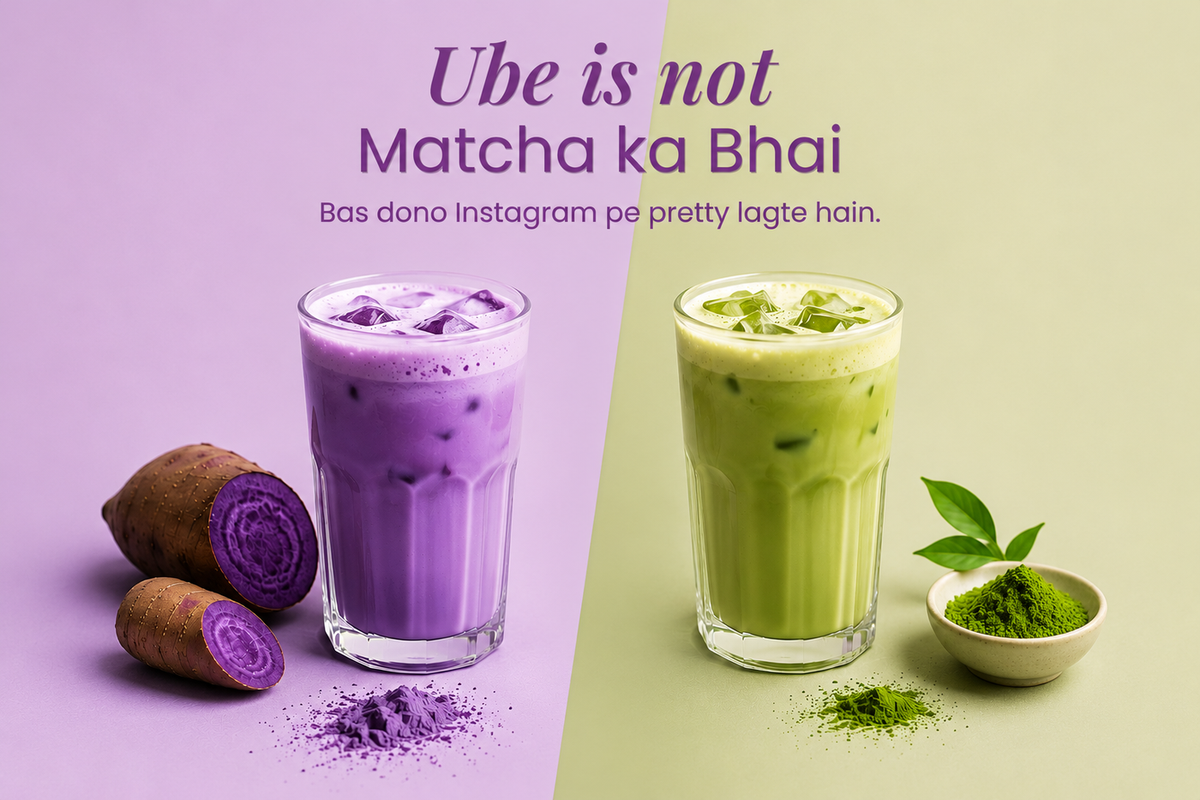
Open your feed today and two colours are fighting for your attention. The deep green of matcha, and the soft purple of ube. Both are creamy, both are everywhere, and both promise to be the drink that makes you feel a little more put together. If you have been staring at the two and wondering what the difference actually is, which one tastes better, which one gives you energy, and which one is right for you, this is the honest, simple guide.
Ube is even being called the next matcha, and the comparison is now everywhere. By the end of this guide you will know exactly how ube and matcha stack up on taste, caffeine, calories, and that calm, focused feeling, and which one belongs in your cup. Let us start with what they actually are.
What is matcha, and what is ube?
Matcha is a finely ground powder made from specially grown green tea leaves, and it comes from Japan, where it has been whisked into bowls for centuries. Its bright green colour comes naturally from chlorophyll, and because the whole leaf is used, a cup of matcha carries more of the tea plant than a regular brew.
Ube is something completely different. It is a purple yam, known botanically as Dioscorea alata, native to the Philippines and loved there in desserts for generations. In India we know the same family of purple yam as ratalu or kand. Its violet colour is natural too, this time from anthocyanins, the antioxidant that also gives blueberries their colour.
So one is a tea and the other is a root vegetable. That single fact explains almost every difference that follows, starting with how they taste.
Ube vs matcha: how do they taste?
This is where the two drinks part ways completely. Matcha tastes earthy and grassy, with a savoury, umami depth and a gentle natural bitterness. Plenty of people love it, but it is fair to say matcha can be an acquired taste, and a poorly made cup can turn sharp and astringent.
Ube goes in the opposite direction. It is mild, sweet and nutty, with clear notes of vanilla and white chocolate and a soft pistachio or coconut finish. There is nothing earthy or vegetable like about it, despite coming from a yam. If matcha is a drink you learn to love, ube is one most people like on the very first sip.
Taste is personal, though. The difference that shapes your whole day is caffeine.
The big difference: caffeine
Matcha contains caffeine. A typical serving has roughly 30 to 70 mg, depending on how much powder you use, which places it somewhere between a cup of green tea and a cup of coffee. For a lot of people that gentle lift is the whole point of reaching for it.
Ube has none. As a root vegetable it is naturally caffeine free, and the Impulse Ube Latte is fully decaf. That is the real fork in the road. Matcha is a stimulant drink. Ube is not.
Which raises the question people really care about. If matcha is loved for calm, focused energy, can a caffeine free drink offer anything close to that?
Which one is better for calm, focused energy?
Here is the part most comparisons get wrong. The calm, clear feeling people associate with matcha does not come from caffeine alone. It comes from an amino acid called L-theanine, which matcha contains naturally. L-theanine is linked with a settled kind of alertness, and in matcha it works alongside the caffeine to smooth out the buzz.
That is genuinely lovely if you want a morning lift. But caffeine has a flip side. It can bring jitters for people who are sensitive to it, it is best kept to earlier in the day, and a late cup can sit between you and a good night of sleep.
This is where ube does something clever. The Impulse Ube Latte adds 40 mg of L-theanine per serve, the same calm focus amino acid that makes matcha feel good, but with no caffeine at all. So you get the settled, switched on feeling without the stimulant, which means you can enjoy it at 4 pm on a deadline day and still sleep soundly that night.
The short version: matcha gives you calm energy with caffeine. Ube, made the Impulse way, gives you calm focus from 40 mg of L-theanine with no caffeine at all.
So far so good on the feeling. What about the part everyone quietly worries about, the calories.
Calories and sugar: the cafe catch
On their own, both matcha powder and ube are light. The calories in any latte, green or purple, come mostly from the milk and the sweetener, not from the headline ingredient. The trouble is that cafe versions of both love to pile on syrup, condensed milk and sugar, which is how a wholesome drink turns into a dessert in a glass.
The Impulse Ube Latte is built to sidestep that. Each serve is just 23 calories with about 1 g of added sugar, sweetened with stevia and monk fruit rather than spoonfuls of sugar. It keeps the indulgent, creamy feel without the heavy aftermath.
Let us line the two up side by side.
|
What you are comparing |
Matcha |
Ube |
|
What it is |
Powdered green tea leaf |
Purple yam, a root vegetable |
|
Comes from |
Japan |
Philippines |
|
Natural colour from |
Chlorophyll (green) |
Anthocyanins (purple) |
|
Taste |
Earthy, grassy, umami, slightly bitter |
Sweet, nutty, vanilla, creamy |
|
Caffeine |
Yes, roughly 30 to 70 mg per serving |
None, naturally caffeine free |
|
Signature antioxidant |
Catechins |
Anthocyanins |
|
L-theanine for calm focus |
Naturally present |
40 mg added per serve in the Impulse Ube Latte |
|
Best time to drink |
Morning or early afternoon |
Any time, including the evening |
|
First sip appeal |
Can be an acquired taste |
Usually liked straight away |
Same wellness energy, two very different drinks. Which brings us to a question the internet has already answered in its own way.
What about ube matcha? Can you have both?
If you cannot choose, there is good news. Ube matcha is already a thing, a layered drink where a green matcha base meets a purple ube top, as pretty to look at as it is fun to drink. At home it is simple enough. Prepare your matcha, prepare an Impulse Ube Latte, and gently layer one over the other in a tall glass. You get the earthy depth of matcha and the sweet, creamy lift of ube in a single cup, caffeine and calm in the same glass.
Does ube taste good in coffee? Meet the dirty ube latte
Here is a twist the matcha crowd does not always expect. Ube does not only stand on its own, it plays beautifully with coffee. Stir a shot of coffee through an ube latte and you get what people call a dirty ube latte, where the sweet, creamy purple meets the depth of coffee in a single glass. It is a lovely best of both worlds, the calm, dessert like character of ube with the lift of a proper cup.
If you would rather skip the measuring, we have bundled the pairing for you in three ube and coffee combos, each one the Impulse Ube Latte matched with a flavoured Impulse coffee:
• Strawberry Ube Dalgona Combo, the Ube Latte with our Strawberry Coffee for a fruity, dessert like cup.
• Hazelnut Ube Cloud Combo, the Ube Latte with our Hazelnut Coffee for a warm, nutty twist.
• Ube Vanilla Latte Combo, the Ube Latte with our Vanilla Coffee for a smooth, classic pairing.
Keep your ube latte calm and caffeine free on its own, or go dirty with a coffee shot whenever you want the extra lift. That is a flexibility a plain matcha routine cannot quite match.
Meet the Impulse Ube Latte, the caffeine free purple option
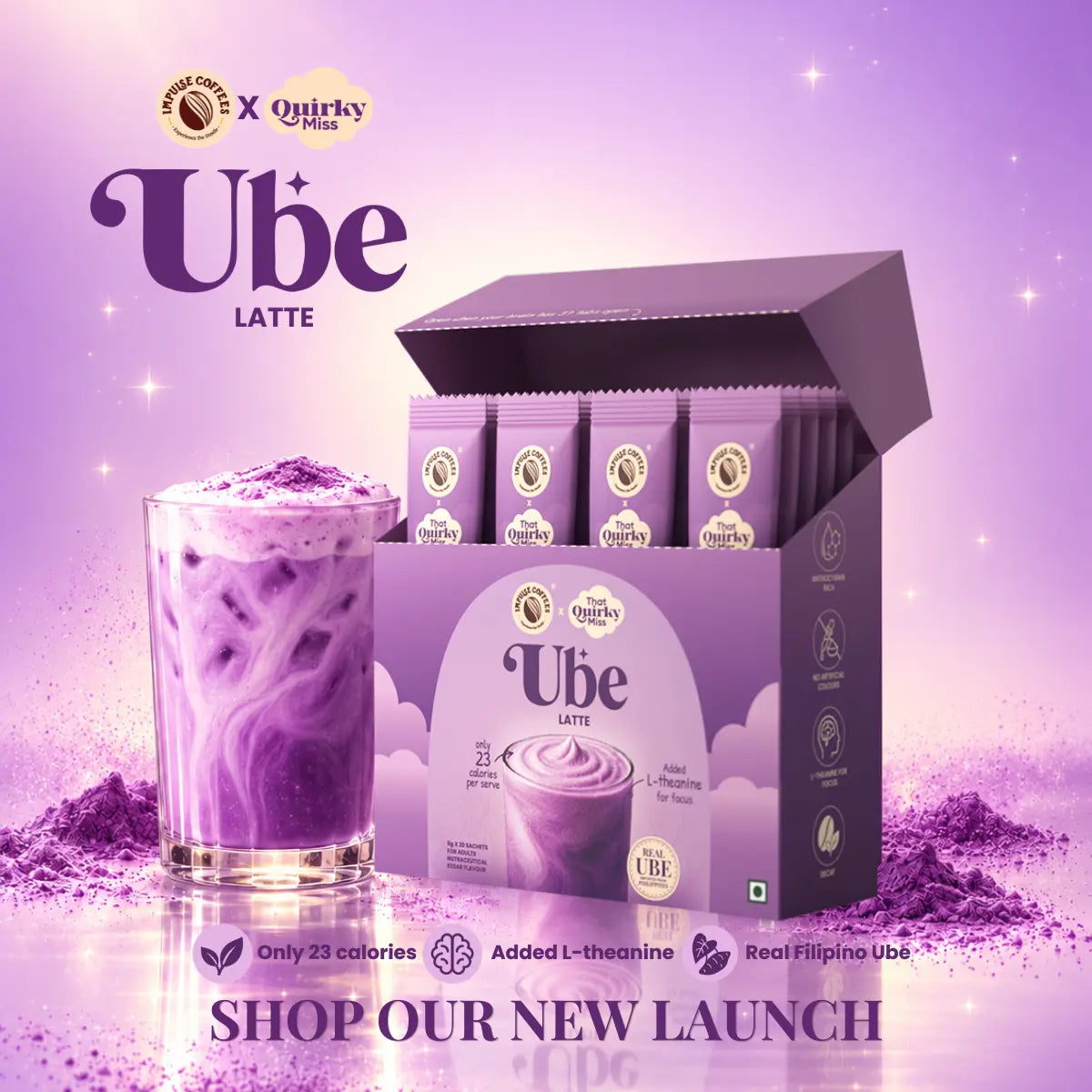
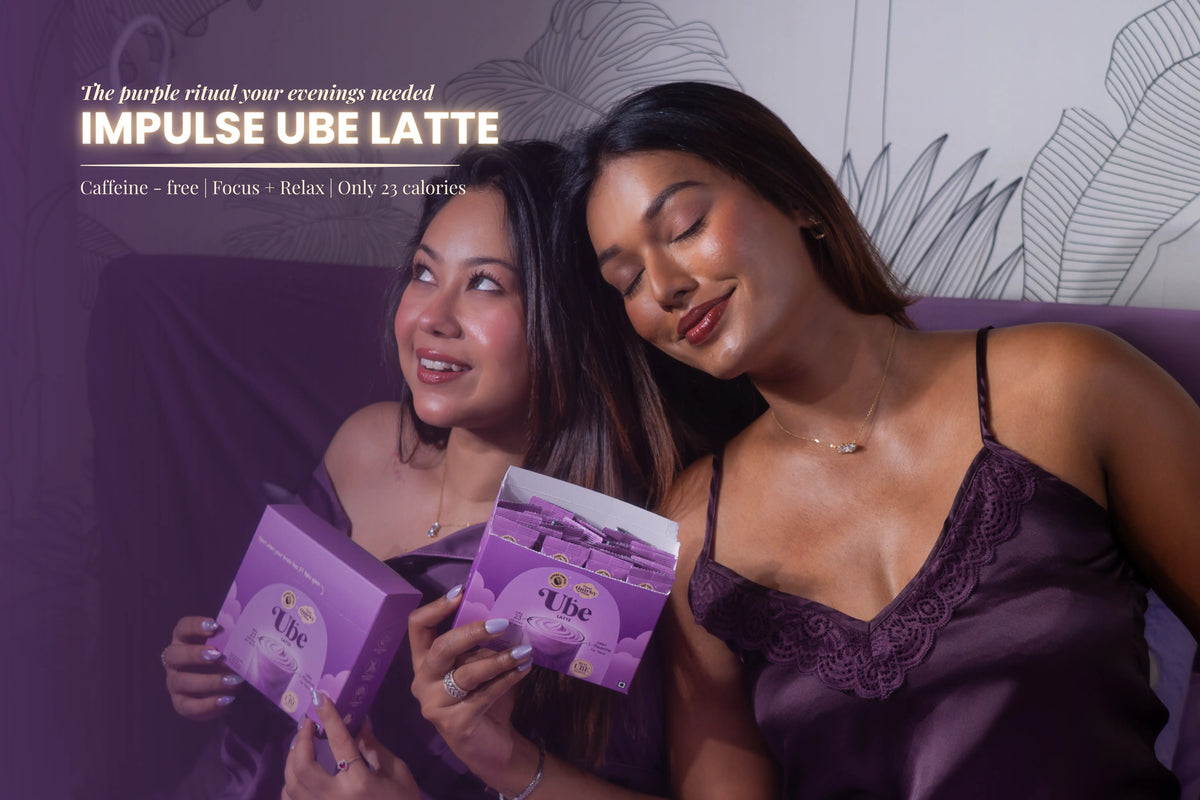
The Impulse Ube Latte is a collaboration between Impulse Coffees and That Quirky Miss. It brings real Filipino ube together with Indian kesar in one calm, creamy cup built for busy days. Real ube imported from the Philippines, just 23 calories and about 1 g of added sugar, sweetened with stevia and monk fruit, 40 mg of added L-theanine for focus, completely decaf, anthocyanin rich with no artificial colours, and plant based. One sachet, 100 ml of cold milk, froth, and enjoy.
If the purple side of this comparison is calling your name, try the Impulse Ube Latte here.
Still weighing it up? Here are the questions people ask most.
Ube vs matcha FAQs
Is ube better than matcha?
Neither is objectively better. Ube and matcha are completely different ingredients, a sweet purple yam and an earthy green tea, each with its own flavour, uses, and benefits. Many people enjoy them on their own, and plenty layer them together as an ube matcha. The better choice is simply the taste and the caffeine level that suits you.
Is ube the next matcha?
Many people think so. Ube is a vibrant purple yam from the Philippines that has grown into a major cafe and dessert trend, often compared to matcha for its striking colour and its popularity on social media. The big difference is that ube is naturally sweet and caffeine free, where matcha is earthy and caffeinated.
Is ube better for you than matcha?
It depends on your health goals. Ube and matcha are different whole foods that serve different purposes, so neither is objectively better for you overall. Matcha brings catechin antioxidants and caffeine, while ube brings anthocyanins and none. For a latte, what matters most is how much sugar and milk get added on top.
Does ube taste good in coffee?
Yes, ube tastes lovely in coffee. The pairing is popular enough to have a name, the dirty ube latte, which is simply an ube latte with a shot of coffee stirred through. If you want to try it without any guesswork, our ube and coffee combos bundle the Impulse Ube Latte with a flavoured coffee ready to go.
Is ube the same as matcha?
No. Matcha is a powder made from green tea leaves, while ube is a purple yam, a root vegetable. They are different plants from different countries, with different colours, tastes, and caffeine levels. The one thing they share is that both are having a big moment as creamy, photogenic lattes.
Does ube have caffeine like matcha?
No. Matcha naturally contains caffeine, roughly 30 to 70 mg per serving. Ube is a root vegetable and is naturally caffeine free, and the Impulse Ube Latte is fully decaf. If you want the drink without the stimulant, ube is the one to reach for.
Does ube taste like matcha?
Not at all. Matcha is earthy, grassy and a little bitter, with a savoury umami note. Ube is sweet, nutty and creamy, close to vanilla and white chocolate. If you find matcha an acquired taste, ube is usually an easy yes from the very first sip.
What is an ube matcha?
Ube matcha is a layered drink that combines a green matcha base with a purple ube top. It is popular on social media for its two tone look, and it gives you the earthy depth of matcha and the sweet creaminess of ube in one glass. You can make a version at home by layering the two.
Does ube give you energy like matcha?
Matcha's lift comes from caffeine working with its natural L-theanine. Ube is caffeine free, so it will not give you a stimulant kick on its own. What the Impulse Ube Latte adds is 40 mg of L-theanine, the calm focus amino acid, so you feel settled and switched on without the buzz or the crash. For a caffeinated version, try it as a dirty ube latte with a shot of coffee.
A quick, honest note. The Impulse Ube Latte is a nutraceutical made for adults and is not intended to diagnose, treat, cure, or prevent any condition. If you are pregnant, nursing, or managing a medical condition, please consult your dietitian before adding it to your routine. Made in India. Tested by an NABL accredited laboratory.
Ube or matcha: the honest verdict
There is no loser here. Matcha is a wonderful morning ritual if you enjoy its earthy taste and want a gentle caffeine lift. Ube is the sweeter, friendlier, caffeine free alternative you can enjoy at any hour, and in the Impulse Ube Latte it carries the same calm focus amino acid that makes matcha special. Choose matcha for the buzz, choose ube for the calm, go dirty with a coffee shot, or layer them as an ube matcha and have it all. Whatever is in your glass, now you know exactly what you are drinking.
Calm. Focus. Reset. That is the Impulse way.

Leave a comment
This site is protected by hCaptcha and the hCaptcha Privacy Policy and Terms of Service apply.